The Verdict
The Dyson PencilVac Fluffycones is a masterclass in industrial design but a disappointment in practical performance. It excels in its hyper-specific niche: a lightweight, secondary vacuum for quick dust-ups on hard floors in a small, minimalist apartment. For nearly everyone else, its weak suction, minuscule dustbin, and poor battery life make it an incredibly expensive, over-engineered broom. It solves a problem of convenience for a few, but creates problems of utility for many, especially at a $585 price point. It's a classic case of social media aesthetics clashing with real-world functionality.
What Went Viral
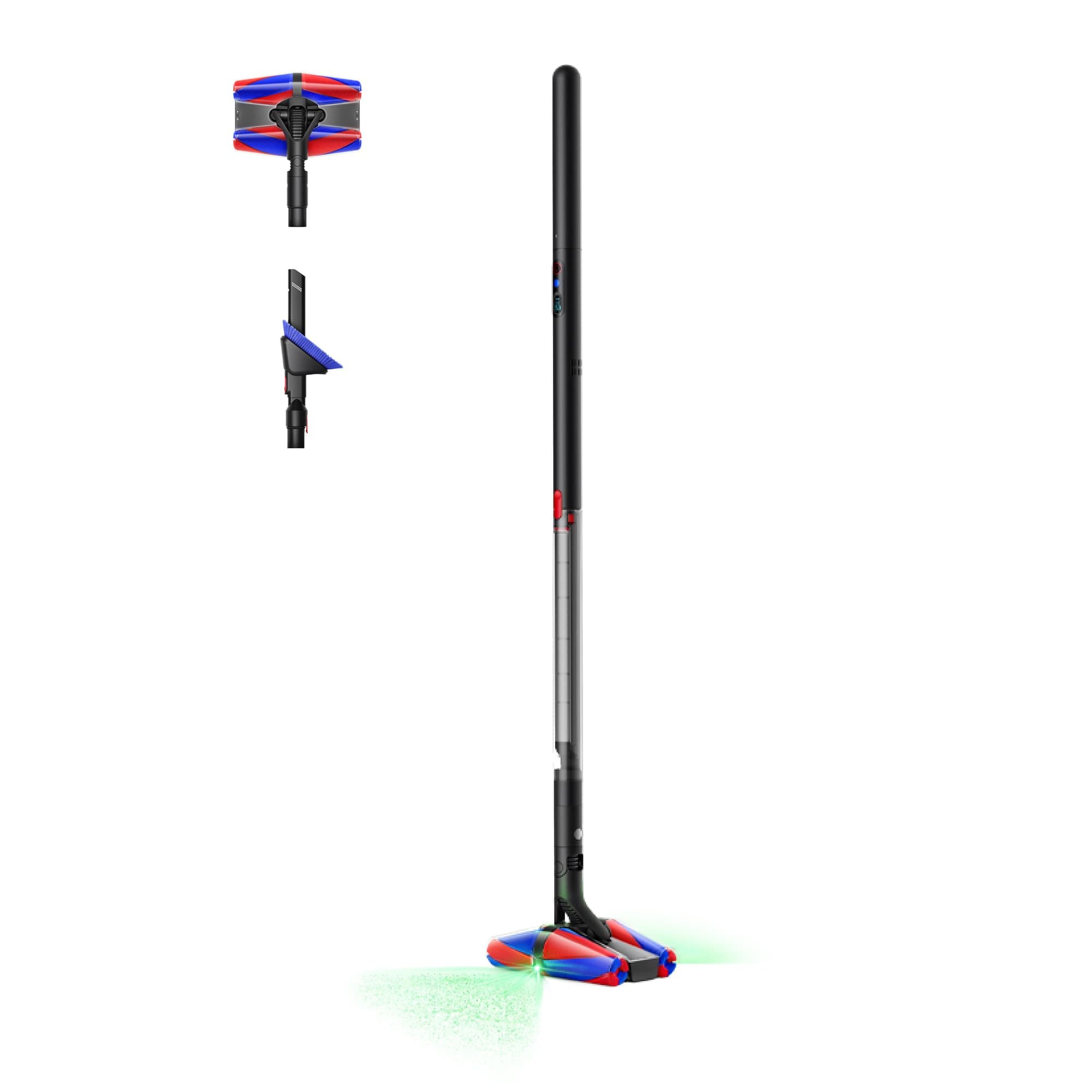
The Dyson PencilVac exploded on TikTok and Instagram by looking like something from the future. Videos, many from Dyson's own marketing or sponsored partners, showcase its impossibly slim, 1.5-inch handle that houses the motor, battery, and dustbin. The visual hook is undeniable: a vacuum that looks more like a high-tech wand than a cleaning appliance. Creators highlighted its ability to glide effortlessly under low furniture and its unique Fluffycones™ brush head, which uses four conical bars to detangle hair and clean in any direction. The addition of a green laser light, illuminating microscopic dust particles, created a satisfying "wow" factor perfect for short-form video, solidifying its image as the peak of #CleanTok innovation.
What the Comments Actually Say
Beneath the glossy, sponsored posts, a more critical picture emerges. The consensus among actual users is that the PencilVac is a highly specialized tool with significant limitations. Reddit discussions in r/dyson and r/VacuumCleaners frequently praise its core concept. One user noted, "The vacuum literally floats on the floor, it's super easy to maneuver," highlighting its primary strength. The lightweight design and hard-floor performance are consistently lauded.
However, the complaints are substantial and recurring. The most significant issue is its performance—or lack thereof—on anything but hard floors. It's functionally useless on carpets. An Amazon reviewer was blunt: "If you have pets, kids, or just live in your space then do not buy this vacuum... It clogs constantly on pet fur."
Many users feel its performance doesn't justify the cost. One YouTube reviewer compared its suction power (a mere 55 airwatts) to a Dyson V8 from 2015, while another Reddit commenter warned, "the pencil vac is strictly style over substance in almost every way."
The practical design elements also draw fire. The 75ml dustbin is considered comically small, requiring constant emptying. The battery life is another major pain point, offering around 20-25 minutes on standard mode and a paltry 5 minutes on boost. This combination of flaws led one YouTube reviewer to call it both "terrible but fantastic," acknowledging its revolutionary feel for small jobs but its impracticality as a primary cleaning tool.
Technical Comparison
When placed against a standard cordless stick vacuum (like Dyson's own V-series or a Shark equivalent), the PencilVac's trade-offs become stark. A typical cordless vacuum weighs between 5-7 pounds, while the PencilVac weighs under 4 pounds. This lightness, however, comes at a steep cost.
- Suction Power: The PencilVac's 55 airwatts are significantly lower than the 150-250 airwatts found in most mid-to-high-end stick vacuums. This is the primary reason it fails on carpets and struggles with larger debris.
- Dustbin Capacity: Its 75ml (0.02 gallon) dustbin is dwarfed by the 500-760ml (0.13-0.2 gallon) capacity of standard models. This means you'll be emptying the PencilVac 7-10 times more often.
- Versatility: The PencilVac is a hard-floor specialist. Its design is awkward for above-floor cleaning (cars, upholstery), whereas standard vacuums come with a suite of attachments designed for whole-home use.
In essence, the PencilVac sacrifices power, capacity, and versatility for an ultra-slim form factor and extreme maneuverability. It's not a replacement for a standard vacuum; it's a supplement.
The Catch
The central catch is that the Dyson PencilVac is marketed with the premium branding and price of a primary, high-performance vacuum, but it delivers the functionality of a secondary, niche gadget. Its core specifications—suction power, battery life, and dustbin capacity—are so limited that it fails as a sole vacuum for any but the most pristine, minimalist living spaces. The viral hype focuses on its sleek design while conveniently ignoring the fundamental compromises that make it impractical for the average home.